SpaceX catches Starship after its return from orbit
Historic tower recovery completes 22-hour test flight
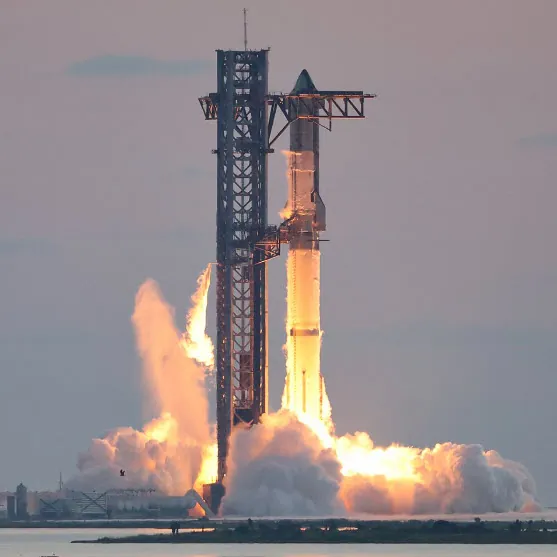
SpaceX has successfully caught the upper stage of its Starship rocket with giant mechanical arms at its launch tower in South Texas, completing the first recovery of an orbital-class spacecraft using the system and advancing the company's effort to make the entire Starship vehicle rapidly reusable.
The spacecraft returned to Starbase, Texas, on Saturday after spending 22 hours and 14 minutes in space. Starship completed 14 orbits of Earth before beginning its controlled reentry and maneuvering back toward the same launch complex where it had departed the previous day.
During the hypersonic return, SpaceX said the spacecraft's thermal protection system and flap actuators performed well. The test provided engineers with data on design changes intended to protect and control Starship during orbital reentry, when the vehicle experiences extreme temperatures and aerodynamic forces.
As Starship approached the tower, it slowed beside the structure before the tower's two mechanical arms — commonly called "chopsticks" — closed around the vehicle. SpaceX telemetry placed the catch at 22 hours and 14 minutes mission elapsed time. The company had previously demonstrated catches of the much larger Super Heavy first-stage booster but had never recovered the Starship upper stage this way after an orbital mission.
The recovery capped Starship Flight 15, which launched Friday from Starbase. During the mission, Starship deployed 26 Starlink V3 satellites while testing orbital endurance, reentry and recovery systems.
SpaceX had hoped to attempt a double catch, recovering both stages at the launch site. That plan ended when the Super Heavy booster experienced a problem during its return. SpaceX diverted it away from the tower and toward the Gulf of Mexico, while the upper stage continued its planned orbital mission.
The successful catch is a major test of SpaceX's plan to fly both stages repeatedly instead of discarding them after each mission. NASA officials also praised the milestone. Starship is central to NASA's Artemis lunar program, which plans to use a modified version of the spacecraft as a lunar lander for astronauts.
Saturday's flight demonstrated several capabilities in a single mission: extended orbital operations, satellite deployment, survival through hypersonic reentry and the first tower capture of a Starship returning from orbit.